





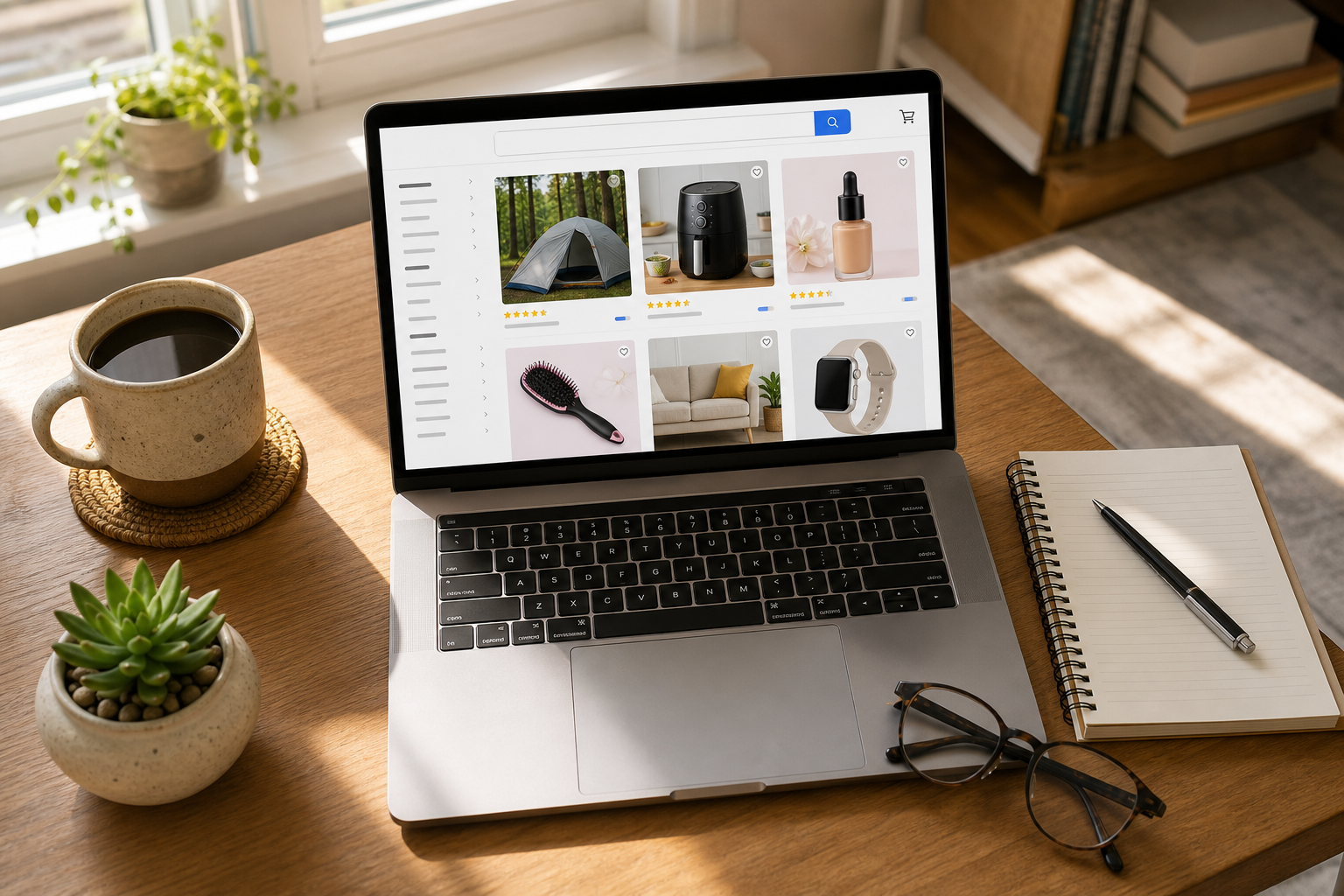
How AI Is Already Helping You Find Better Products — Without You Noticing
slickpurchase
Aug 12, 2026
You've Already Used AI to Shop. You Just Didn't Call It That.
Ever searched for "cozy blanket" and ended up finding exactly the right throw — the one in the right size, the right price range, the right material — without scrolling through hundreds of irrelevant results? That wasn't luck. That was AI doing its job quietly in the background while you did yours: browsing.
Most people associate AI with chatbots, self-driving cars, or something that feels futuristic and slightly intimidating. But the version of AI that affects your daily life most directly is a lot more mundane — and a lot more useful. It's the engine running underneath every large online store, sorting through thousands of products to surface the ones most likely to be exactly what you need.
Here's what's actually happening when you shop a catalog of 25,000+ products — and why it matters for getting more out of every browsing session.
The Problem a Big Catalog Creates (and Solves)
A store with products spanning home & kitchen, beauty, electronics, sports gear, pet supplies, and twenty other categories is genuinely useful. But it also presents a real challenge: how do you find what you want without wading through everything you don't?
A physical store solves this with aisles and signage. An online store with tens of thousands of SKUs can't rely on that. The navigation has to do more work — and AI is what makes that possible at scale.
Without it, a search for "coffee" in a general merchandise store might return coffee makers, coffee tables, coffee-scented candles, and a book about Italian café culture — all ranked equally, all equally unhelpful. With it, the results are filtered, ranked, and shaped by signals that go well beyond keyword matching.
What AI Is Actually Doing When You Search
When you type a search term into an online store, a few things happen almost simultaneously that most shoppers never think about.
It reads intent, not just words. Modern search systems are built to understand what you mean, not just what you typed. "Something for a small outdoor patio" is not a product name — but AI-powered search can parse that phrase and return patio furniture covers, string lights, and compact grills before you've even refined your query.
It filters noise from a large catalog. In a store with 25,000+ products across 20+ categories, the signal-to-noise problem is real. AI ranking systems weigh factors like category relevance, product popularity, and how other shoppers with similar search behavior ended up — to push the most likely matches to the top. You see fewer results, but better ones.
It learns from patterns across shoppers. If thousands of people who searched for "kitchen organizer" also clicked on a specific type of drawer divider, that signal feeds back into the system. The next person who searches gets the benefit of that collective behavior — without anyone explicitly programming "show drawer dividers for kitchen organizer searches."
The Recommendation Layer You Scroll Past Every Day
Product recommendations — those "You might also like" or "Frequently bought together" sections — are where AI's influence is most visible, even if the label "AI" never appears on the page.
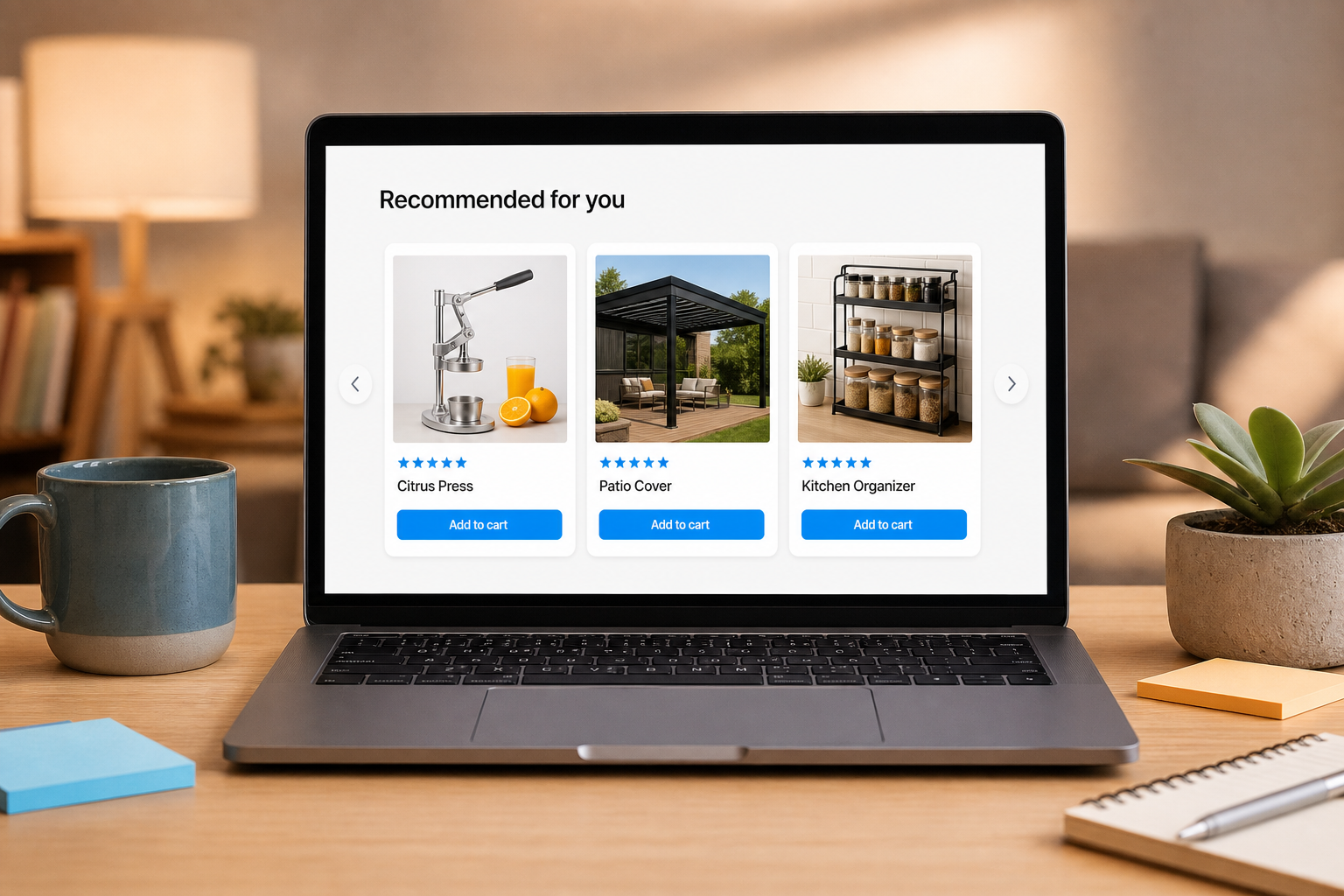
These aren't random. They're generated by models that look at purchase history, browsing patterns, and product relationships to surface items that genuinely complement what you're already considering. If you're looking at a citrus press, a recommendation engine might surface a matching kitchen scale or a glass pitcher — not because someone manually paired them, but because the pattern of shoppers who bought one often bought the other.
Done well, this is the closest thing online shopping has to a knowledgeable store clerk who says, "If you like that, you'd probably love this." Done poorly, it's just noise. The difference is almost entirely in the quality of the underlying model.
Filtering: The Unsung Hero of the Browsing Experience
Filters don't sound exciting. But the ability to narrow 25,000 products down to the 40 that actually match your needs — by price range, category, rating, availability — is where a lot of real AI work happens quietly.
Smart filtering systems don't just apply the criteria you set. They also anticipate which filter combinations are useful for a given search, surface the most relevant options first within a filtered view, and flag when a filter combination returns too few results before you hit a dead end. It's a small thing. It saves real time.
If you've ever filtered a search, gotten useful results immediately, and moved on without thinking about it — that's the system working exactly as intended.
Why This Matters More in a General Merchandise Store
A niche store selling only, say, camping gear doesn't need as much AI horsepower. The catalog is small, the customer intent is narrow, and a simple keyword search does most of the work.
A general merchandise store is a different problem entirely. When the same storefront sells electric salt and pepper grinders, six-person tents, patio furniture covers, and beauty products — all in the same checkout flow — the browsing experience has to work harder to feel coherent and useful rather than overwhelming.
That's the case where AI-powered discovery earns its keep. It's what makes it possible to shop across 20+ categories without feeling like you're lost in a warehouse. The time and money case for one-stop shopping only holds up if you can actually find what you need quickly — and that's where the technology quietly does the heavy lifting.
What You Can Do to Work With It
AI-powered search isn't magic — it works better when you give it something to work with. A few habits that actually help:
- Be specific in your search terms. "Waterproof tent for 6 people" will return sharper results than just "tent." The more context you give the search bar, the more the system can narrow on intent rather than just keywords.
- Use filters early, not as a last resort. Setting a price range before you start browsing — not after you're already overwhelmed — keeps the results manageable from the start.
- Pay attention to what comes up in recommendations. If you're browsing one category and a recommendation catches your eye in another, it's worth a look. These surfaces often catch things you'd have wanted but didn't think to search for.
- Don't ignore the sort order. Sorting by "best match" versus "price: low to high" changes what the algorithm prioritizes. Switch between them depending on whether you're optimizing for relevance or budget.
The Short Version
AI in ecommerce isn't a future feature. It's already running every time you open a search bar, scroll past a recommendation, or apply a filter and get useful results in under a second. You've been benefiting from it for years — understanding how it works just helps you use it more deliberately.
Ready to put it to work? Browse SlickPurchase's full catalog — 25,000+ products across 20+ categories, with free shipping on most orders and a search experience built to surface what you actually need. New shoppers can use code WELCOME5 for 5% off their first order.
Frequently Asked Questions
Does AI actually make a difference in how I find products online?
Yes — and the difference is most noticeable in larger catalogs. In a store with thousands of products across many categories, AI-powered search and ranking determines which results appear at the top of your query. Without it, you'd be manually sifting through far more irrelevant results before finding what you need.
Is my browsing data being used to personalize my results?
Most ecommerce platforms use some form of session data — what you've searched, clicked, or added to cart during a visit — to shape recommendations and search results. The specifics depend on the store's privacy policy and the tools they use. In general, the more you browse in a session, the more relevant the suggestions tend to become.
How do I get better search results when browsing a large store?
Be as specific as possible in your search terms — include the use case, size, or material when you know it. Combine that with filters (especially price range and category) applied early in your session. Specific inputs give the search system more to work with, which means sharper, more relevant results from the first page.
What's the difference between AI-powered search and a regular keyword search?
A basic keyword search matches your exact words to product titles and descriptions — it doesn't interpret meaning. AI-powered search understands intent, handles synonyms and natural language, and ranks results based on relevance signals beyond just word matching. The practical difference: you're less likely to hit a dead end because you used a slightly different word than the product listing did.
Share this post: