
Recent Post


How AI Actually Helps You
Sep 25, 2026

What 'Free Shipping' Actually Involves
Sep 22, 2026

How AI Actually Reads Your
Sep 16, 2026

How AI Is Used in
Sep 15, 2026
Tags
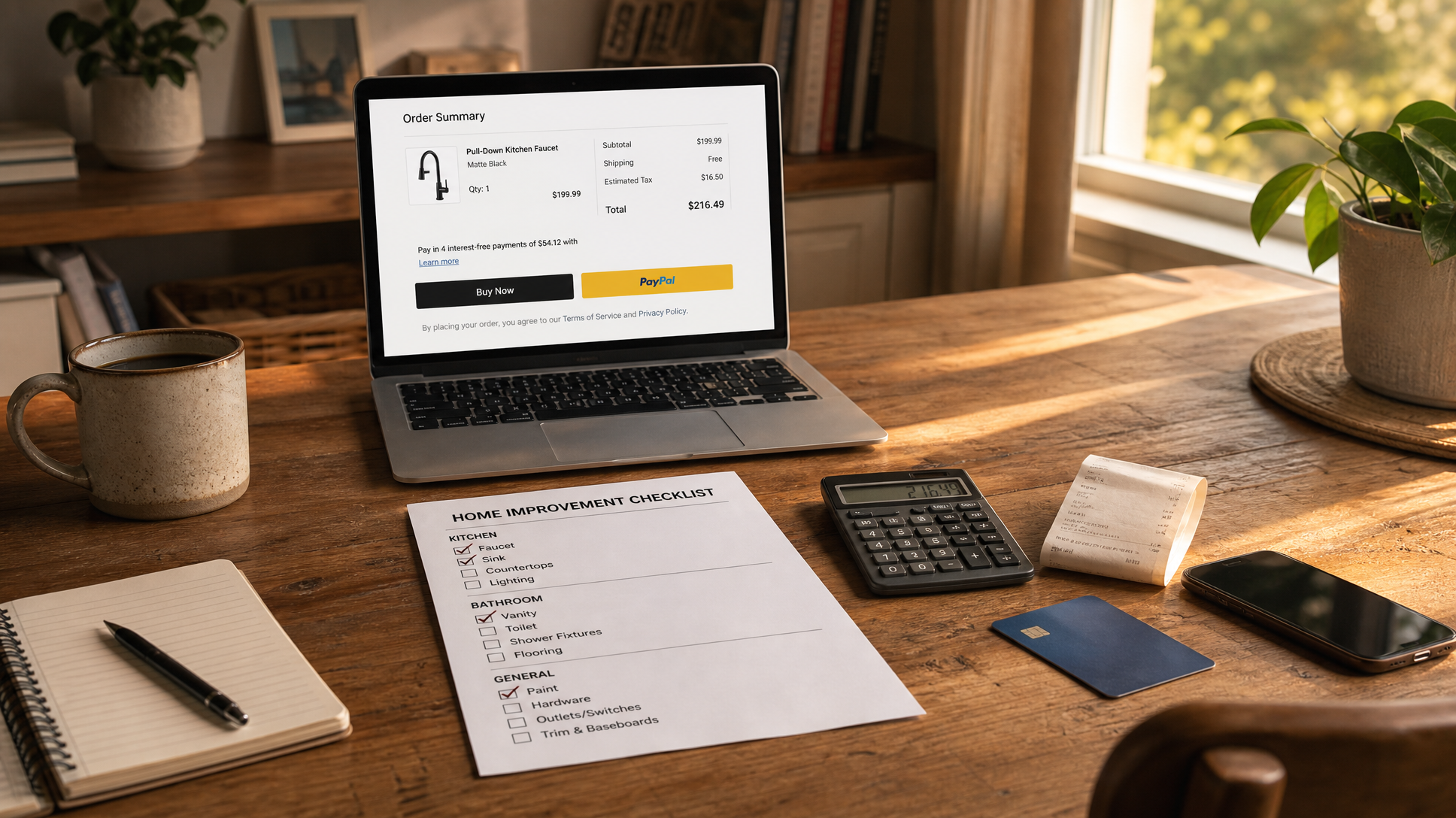
Buy Now Pay Later for Home Improvement Orders: What You Actually Need to Know Before You Use It
slickpurchase
Sep 29, 2026
The Checkout Screen That Looks Too Good to Pass Up
You've filled your cart with everything you need to finally tackle that home project — a new patio cover, kitchen upgrades, maybe a set of outdoor furniture. The total is real money. Then, right before you pay, a banner appears: "Split into 4 easy payments. No interest. No fees." It feels like a gift.
Sometimes it is. Sometimes it isn't. The difference depends entirely on which type of BNPL plan you're looking at — and most shoppers don't realize there are meaningfully different kinds until they've already committed to one.
This guide breaks down how each type actually works, where the real risks live, and how to decide whether BNPL is the right move for your specific purchase.
First, Know That "BNPL" Covers Two Very Different Products
The term "buy now pay later" gets used for plans that work nothing alike. Lumping them together is where most of the confusion starts.
True 0% installment plans
These are the plans from providers like Afterpay, Klarna (Pay in 4), and Sezzle. You split the purchase into equal payments — usually four — spread over six weeks. If you pay on time, you pay exactly the original purchase price. No interest, no fees. The provider makes money from the merchant, not from you.
This is the version most people picture when they hear BNPL. It's also the version that's genuinely useful for cash-flow management on a purchase you can already afford.
Deferred-interest financing
This is the one that bites people. It's common through store-branded credit accounts and some longer-term BNPL plans. The deal looks like: "0% interest for 12 months." But here's what that actually means: interest is accruing the entire time, just not charged yet. If you pay the balance in full before the promotional period ends, you owe nothing extra. If you have even one dollar left when the clock runs out, you get hit with all the interest that accumulated over those 12 months — at once.
According to the Consumer Financial Protection Bureau, deferred-interest products are one of the most common sources of consumer financial surprise, precisely because the word "deferred" is easy to mistake for "waived." It isn't.
What BNPL Actually Does to Your Credit
This is the part most guides skip, and it matters more on larger purchases.
Short-term pay-in-4 plans from most major providers typically do a soft credit pull when you apply — the kind that doesn't affect your score. Many also don't report on-time payments to the credit bureaus, which means you don't build credit history from them either. It's a neutral transaction, credit-wise, as long as you pay on time.
Miss a payment? Some providers do report delinquencies, and a missed payment on a BNPL plan can show up on your credit report just like a missed credit card payment.
Longer-term BNPL financing — 6, 12, or 18-month plans — often involves a hard credit pull and functions more like a loan or revolving credit line. Opening one can temporarily lower your score, and your balance-to-limit ratio on that account can affect your overall credit utilization.
The short version: for a small, short-cycle BNPL plan on a purchase you'd pay off in six weeks anyway, the credit impact is minimal. For a 12-month deferred plan, treat it like opening a new credit account — because that's effectively what it is.
When BNPL Actually Makes Sense
There's a real use case here, and it's worth naming clearly instead of just warning you off the whole category.
BNPL works well when the purchase is something you'd buy regardless, the total is already within your near-term budget, and you're using a true 0% pay-in-4 plan with no deferred interest. Say you're ordering a patio furniture cover before a big weekend — you have the money, but it's sitting in next week's paycheck. A four-payment split costs you nothing and smooths out the timing. That's the product working as intended.
It also makes sense when you're disciplined enough to set a calendar reminder for the end of any promotional period and pay the balance before that date. If you're that person, a 12-month 0% offer (true 0%, not deferred) can be a legitimate interest-free loan.
When BNPL Quietly Costs More Than a Credit Card
Here's where the math turns against you — and it happens more often than the marketing suggests.
You're carrying a balance you can't actually pay off in time. If you're financing a home improvement order because you genuinely don't have the cash yet and won't for several months, a deferred-interest plan is a trap. You'll pay the full accrued interest in a lump sum at the end. A credit card with a known APR might actually be cheaper, because at least the interest charges are predictable and spread out.
You're making multiple BNPL purchases at once. Each plan has its own payment schedule. It's easy to lose track of four separate auto-debits hitting your account on different dates. One missed payment, and you're looking at late fees or a delinquency mark.
You have a rewards credit card. If you're paying a 0% BNPL plan anyway and you have a card that earns 1.5–2% cash back, you're leaving real money on the table. You could charge the purchase, earn the rewards, and pay the statement balance in full — same outcome, better return.
The plan has late fees. Some BNPL providers charge flat late fees per missed installment. On a small purchase, that fee can represent a surprisingly high effective interest rate. Read the terms before you confirm.
Three Questions to Ask Before You Check That Box
- Is this true 0% or deferred interest? Look for the word "deferred" anywhere in the fine print. If you see it, the interest is already accumulating — you just don't owe it yet.
- Can I pay this off comfortably before the plan ends? Not "probably" — actually comfortably, with money you already have or will definitely have. If the answer is uncertain, the plan isn't the right tool.
- Would a credit card with rewards or a lower APR serve me better? Run the comparison honestly. BNPL is not automatically the cheapest option just because it says 0%.
If you can answer all three clearly in favor of BNPL, it's probably a fine choice. If any of them give you pause, slow down before you commit.
For a broader look at how to stretch your shopping budget across categories — not just on payment methods — this guide on smarter one-stop shopping is worth a read.
The Bottom Line
BNPL isn't inherently bad. But it's also not inherently good. It's a financial tool, and like any tool, using it wrong costs you. The shoppers who get hurt by it aren't careless — they just didn't know that "0% interest" and "0% deferred interest" are two completely different sentences.
Know which plan you're signing up for. Know your payoff timeline. And if the math doesn't clearly favor BNPL, your regular credit card or a straightforward debit purchase is almost always the simpler, safer move.
Shop home improvement essentials at SlickPurchase — and choose the checkout method that actually works for your budget, not just the one that looks easiest in the moment.
Frequently Asked Questions
Does using BNPL hurt your credit score?
It depends on the plan. Most short-term pay-in-4 plans use a soft credit check that doesn't affect your score. Longer financing plans — 6 to 18 months — often involve a hard credit pull, which can temporarily lower your score. Missing a payment on any BNPL plan can result in a negative mark if the provider reports to the credit bureaus.
What's the difference between 0% interest and deferred interest?
True 0% interest means no interest accumulates at all during the promotional period. Deferred interest means interest is accumulating the whole time — it's just held back. If you don't pay the full balance before the promotional period ends, all that accumulated interest gets charged at once. Always look for the word "deferred" in the terms before you sign up.
Is BNPL ever a better choice than a credit card?
Yes — when you're using a true 0% pay-in-4 plan on a purchase you can comfortably pay off within the plan's timeline, and your credit card carries an interest rate you might end up paying. In that scenario, BNPL costs you nothing and keeps cash in your account a little longer. The calculation flips if you have a rewards card you pay in full each month, since you'd earn cash back or points on the same purchase for free.
Can I use BNPL for home improvement purchases specifically?
Yes, BNPL is available at many online retailers for home improvement and home goods orders. Whether it's the right choice depends on the plan type, the total amount, and your ability to pay it off on schedule — not on the category of purchase. The same rules apply regardless of what's in your cart.