

Frequently Asked Questions
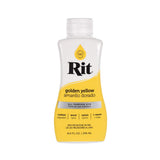
Rit Dye Liquid comes in a wide selection of colors including Golden Yellow. This variety allows you to choose the perfect shade for your project.
The Rit Dye Liquid is available in an eight-ounce bottle. This size is convenient for various dyeing projects without being too bulky.
Rit Dye Liquid is suitable for dyeing natural fabrics like cotton, linen, and silk. This versatility makes it ideal for clothing, shoes, and accessories.
To use Rit Dye Liquid for tie-dye, mix the dye with water in a plastic container and apply it to your fabric using rubber bands. You can create various patterns by manipulating the fabric before dyeing.
Yes, you can use Rit Dye Liquid in a washing machine. Simply follow the instructions for the correct dilution and cycle settings to achieve the best results.
Yes, Rit Dye Liquid is suitable for beginners. Its ease of use and variety of application methods make it accessible for anyone new to dyeing.
Store Rit Dye Liquid in a cool, dry place away from direct sunlight. Ensure the cap is tightly sealed to prevent leakage and evaporation.
Yes, Rit Dye Liquid does have a shelf life. It is best used within five years of purchase for optimal results.
Clean up spills of Rit Dye Liquid immediately with soap and water. For dyed surfaces, a damp cloth should help remove any excess dye.
Yes, you can mix different colors of Rit Dye Liquid to create custom shades. Experimenting with ratios can yield unique colors for your projects.
Yes, Rit Dye Liquid is safe for children's clothing when used according to the instructions. Ensure that the dye is completely rinsed out before wearing.
To coordinate colors, select shades that complement each other based on color theory. Use the color wheel as a guide for harmonious combinations.
You can use several techniques including tie-dye, ombre, and shibori patterns with Rit Dye Liquid. Each method offers unique results based on application.
Rit Dye Liquid works best on natural fabrics. For synthetic fabrics, consider using Rit DyeMore, which is formulated for those materials.
If your dye project doesn't turn out as expected, try adjusting the dye concentration or application method. You can also experiment with different techniques to improve results.
You May Also Like